 CulinaryTravelist
I’ll be honest: before my 2026 trip, I thought Manhattan was just going to be a loud, crowded concrete jungle. I was half right about the loud part—but the place absolutely blew my mind. The moment I emerged from Penn Station into the neon chaos of Midtown, I felt like I’d stepped onto a movie set. The skyscrapers, the honking cabs, the smell of roasted nuts from a street cart—it was all there, humming like a live wire. If you’re planning your first visit, let me save you some guesswork. Here’s my first-person rundown of the best things to do in Manhattan, cobbled together from my own wandering, a few wrong turns, and plenty of “pinch me” moments.
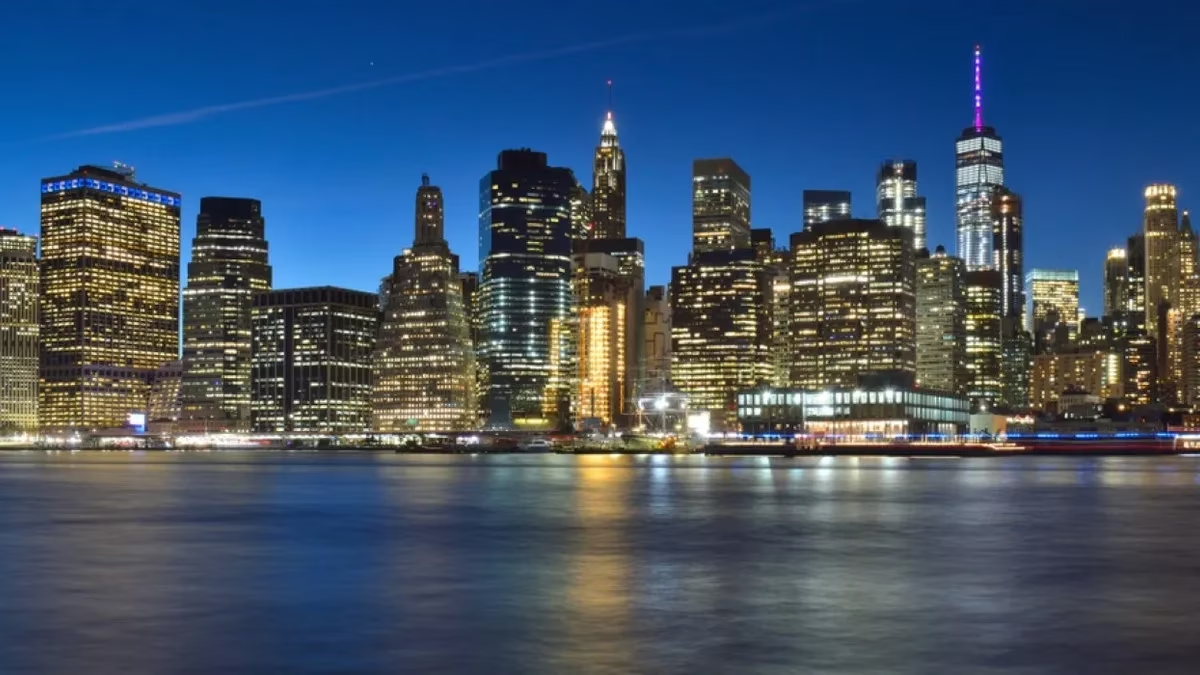
Broadway and the Theater District: The Real Deal
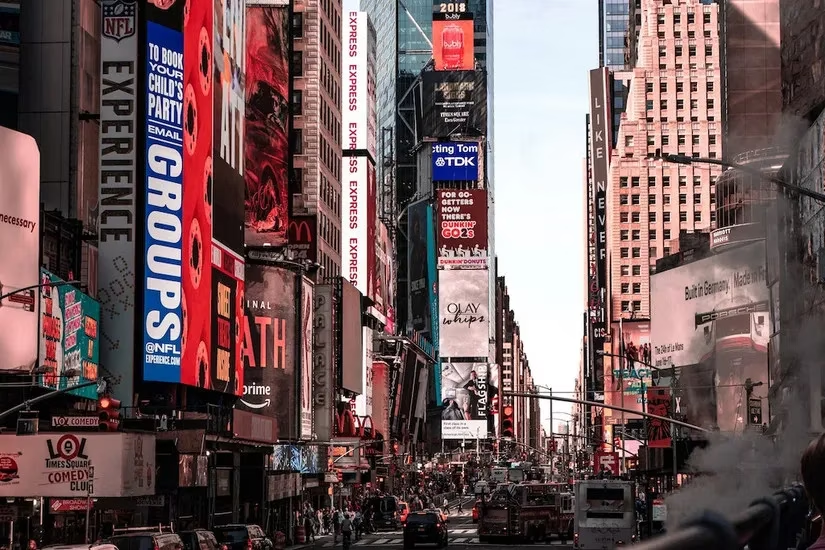
I’m a sucker for live theater, so Broadway was at the top of my list. The Theater District near Times Square is crammed with marquees, and scoring a ticket to a hot show like Hamilton, Wicked, or Six: The Musical is a no-brainer if you love musicals. I walked into The Museum of Broadway on West 45th Street to geek out over props, costumes, and a timeline of New York theater history. Admission started around $29 when I checked, and honestly it was worth every penny just to see the glitzy memorabilia up close. Times Square itself is a major tourist magnet—flashy billboards, street performers, and a true melting pot. Keep your eyes peeled, though: it’s a hotspot for pickpockets and overpriced souvenirs.
Museum Hopping Like a Local
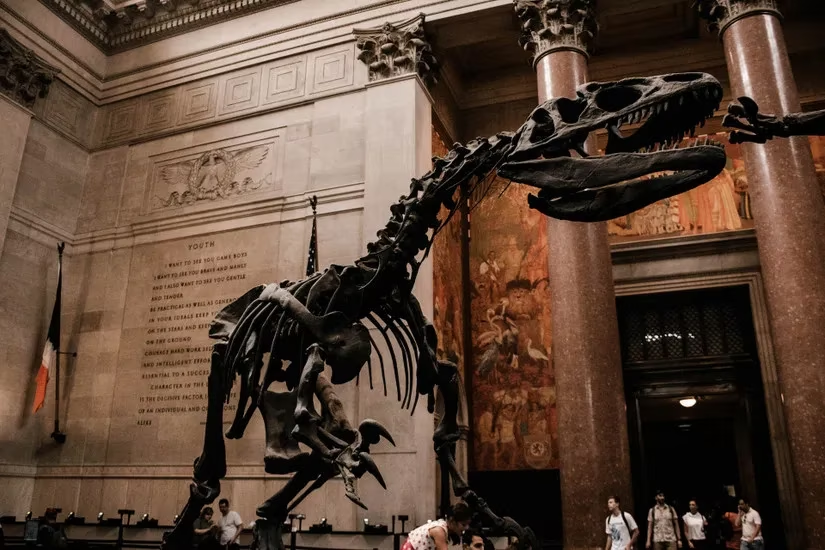
Manhattan’s museums are next-level. I spent a whole afternoon at The Metropolitan Museum of Art on Fifth Avenue—over 5,000 years of art from around the world. General admission was $30 for adults, but New York State residents can pay what they wish, which is a nice hack. On the Upper West Side, the American Museum of Natural History had me staring at dinosaur skeletons like a little kid. Don’t skip the Tenement Museum on the Lower East Side; it’s inside an actual tenement building and tells real stories of immigrants who once lived there. I also popped into the Museum of Modern Art on West 53rd Street, where tickets started at $25 for adults.
Observation Decks: Up, Up, and Away
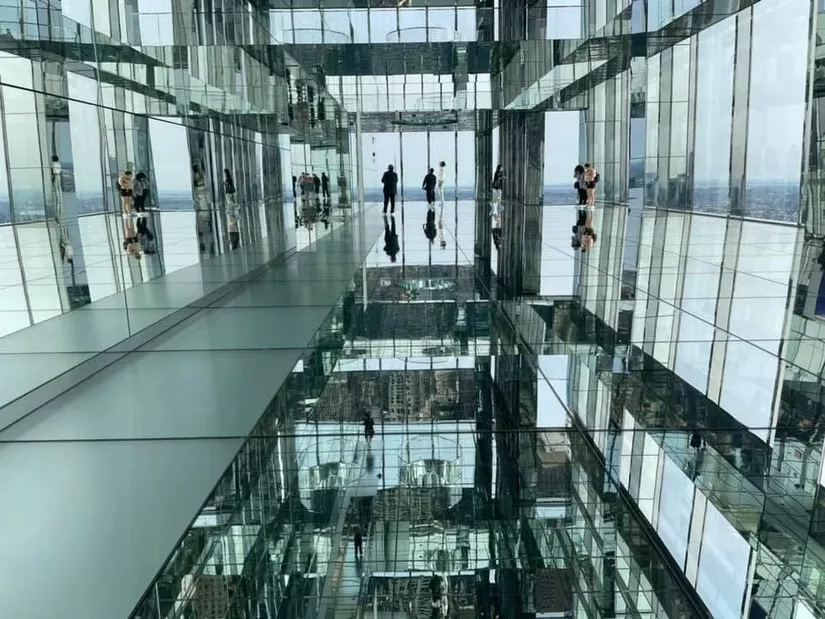
I’m not usually one for heights, but Manhattan’s observation decks are worth the sweaty palms. The Empire State Building is the OG—it has been an icon since 1931, with observatories on the 86th and 102nd floors. Top of the Rock sits 70 floors above Rockefeller Center with three levels of indoor and outdoor views. One World Observatory, between the 100th and 102nd floors of One World Trade Center, offers climate-controlled comfort plus a restaurant and bar on the 101st floor. The Edge at Hudson Yards is a trip: it’s the highest outdoor sky deck in the Western Hemisphere, with a glass floor looking 100 stories down. Then there’s SUMMIT One Vanderbilt, which opened in 2021 and is more like a three-level multisensory art immersion than a traditional deck. The balloon-like orbs in the Air exhibit made me feel like I’d fallen into a dream.
Green Spaces That Save Your Sanity
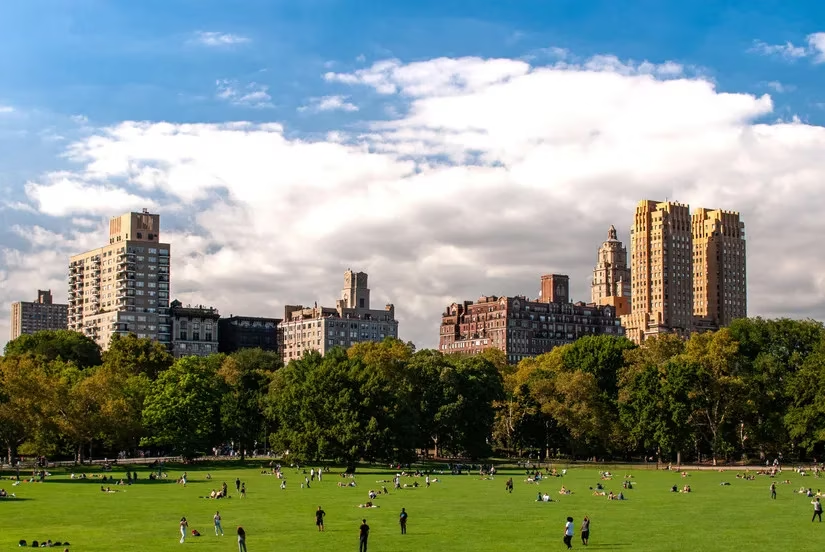
After all that concrete, Central Park felt like a breath of fresh air—literally. It’s smack in the middle of the Upper East and Upper West sides, with a zoo, gardens, a castle, bridges, and meadows. I wandered without a plan, which is honestly the best way to do it. Washington Square Park in Greenwich Village has the famous arch and a much more intimate, people-watching vibe. Bryant Park behind the New York Public Library is great for the holiday market and ice skating in winter, plus movie nights in summer. The High Line, a public park built on an old freight rail line, connects Chelsea/Meatpacking District to Hudson Yards and is perfect for a chill stroll. Riverside Park on the Upper West Side even had a scene in You’ve Got Mail—a fun little nugget for movie buffs.
Iconic Neighborhoods and Landmarks
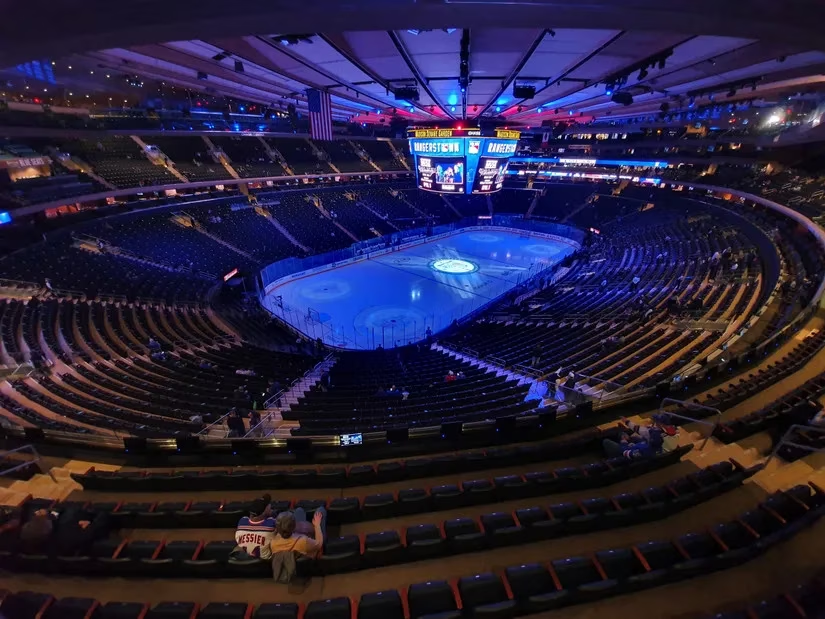
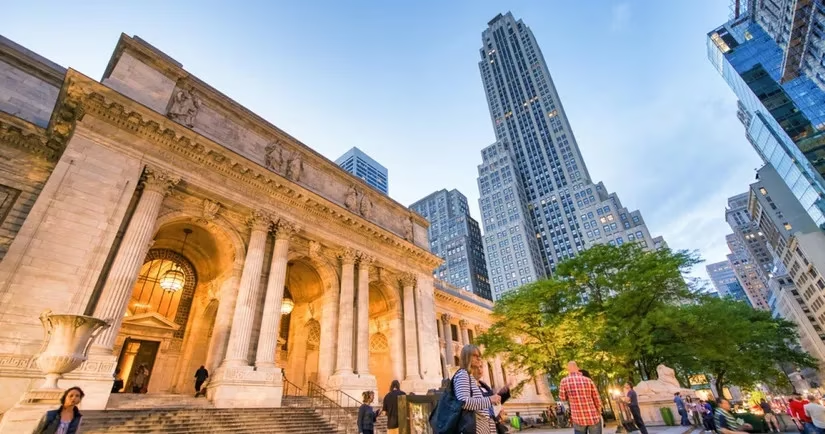
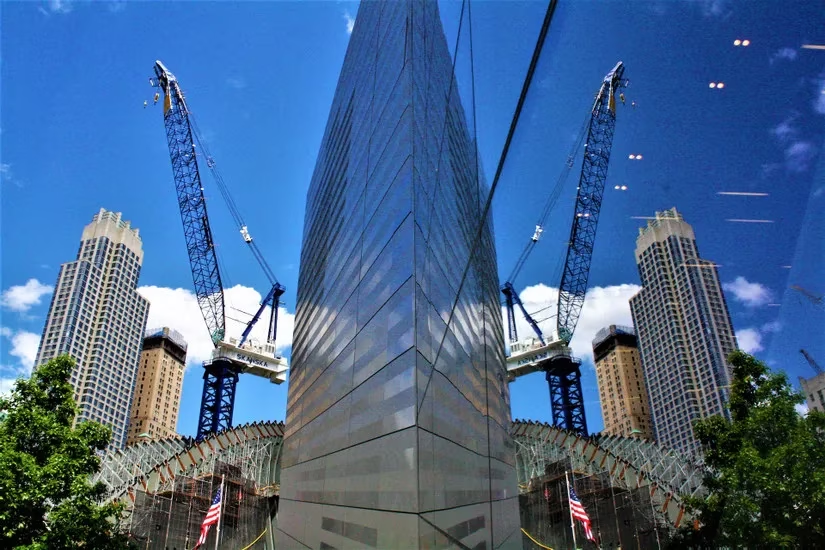
I couldn’t leave Manhattan without hitting the classic stops. Madison Square Garden, nicknamed “The Mecca,” is home to the Knicks and Rangers—catching a game or concert there is electric. Fifth Avenue, aka Millionaire’s Row, is lined with luxury stores like Bergdorf Goodman and Louis Vuitton, plus the stunning New York Public Library. St. Patrick’s Cathedral stopped me in my tracks with its Neo-Gothic architecture and stained glass. And the 9/11 Memorial & Museum was deeply moving—free to enter the memorial, with the names of nearly 3,000 victims inscribed on bronze plaques. It’s a sobering but essential stop.
Chinatown: A World Within a Borough
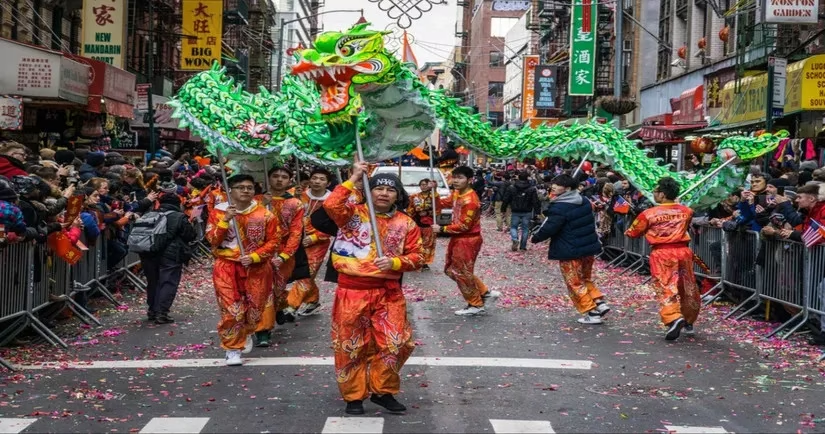
My final day, I took a hard left into Chinatown and suddenly felt like I’d teleported to another continent. Manhattan’s Chinatown is the largest concentration of Chinese-descent folks in the Western Hemisphere. The produce markets, noodle houses, and dim sum spots made my taste buds do a happy dance. I grabbed some soup dumplings, bought a few quirky souvenirs, and mentally bookmarked it for next time.
Quick Cheat Sheet
| Experience | Why Go | Starting Price (Adult) |
|---|---|---|
| Broadway show | Live theater magic | Varies by show |
| The Met | 5,000+ years of art | $30 |
| AMNH | Dinosaur wing | $28 |
| Empire State Building | Iconic observatory | $44 |
| SUMMIT One Vanderbilt | Multisensory art deck | $39 |
| 9/11 Memorial & Museum | Sobering history | Free memorial |
Manhattan is a lot—there’s no sugarcoating it. But that’s exactly why it works. Whether you’re catching a Broadway show, eating your way through Chinatown, or just getting lost in Central Park, the energy is contagious. By the time I left, I was already scheming my next trip back. In the Big Apple, the clichés are true: it really is the city that never sleeps.
Comments