 CulinaryTravelist
South America’s vibrant cities, colonial towns, and coastal villages share a common, irresistible secret: their streets are living culinary theater. Every sizzling grill, every golden pastry, and every colorful stall tells a story of migration, tradition, and sheer ingenuity. While the continent’s natural wonders—from Patagonia’s glaciers to the Amazon rainforest—deserve their own spotlight, it is often the food found on a humble street corner that leaves the most lasting impression. Imagine biting into a crispy, deep-fried dough filled with spiced meat, or sipping a chilled sugarcane juice under the shade of a market tent. These experiences don’t just satisfy hunger; they connect you to the pulse of a nation. Across South America, street food is a daily ritual, a social glue, and an art form perfected over generations. The region’s culinary identity is a tapestry woven from Indigenous ingredients, African influences, and European techniques, with a dash of Asian flair in places like Lima. But with so many options, where should a curious traveler begin? Let’s wander through the continent’s most beloved street eats—from the ever-present empanada to the towering Pepito—and discover why these simple foods have captured hearts (and stomachs) across borders.
The Empanada: A Continent United by Dough
No street food is as universally recognized in South America as the empanada. Derived from the Spanish verb empanar (to wrap in bread), this hand-held pocket arrived with colonizers and was eagerly adopted by nearly every Latin American country. Yet, ask for an empanada in Colombia, Argentina, or Chile, and you’ll receive a distinctly different creation. In Colombia, the dough is made from masarepa—precooked cornmeal—and shaped into a small, chubby crescent before being fried to a deep gold. Inside, a savory mixture of shredded meat, garlic, onion, and bell pepper awaits. Cross the Andes into Argentina, and the empanada transforms significantly: the pastry skin becomes a wheat-flour dough, often baked rather than fried, and the fillings range from spiced ground beef with olives and hard-boiled egg to ham-and-cheese or sweet corn. In Venezuela, the filling might include a hearty chicken stew; in Peru, aji amarillo brings a gentle heat. The beauty of the empanada lies precisely in this versatility—it is a canvas for regional identity, yet always recognizable as the perfect one-handed snack.
Cevichoco: Ecuador’s Vegan Ceviche Reinvented
What happens when Ecuadorian cooks take inspiration from Peru’s iconic ceviche but swap out the fish for a humble legume? The answer is cevichoco, a street-food phenomenon that dominates Quito’s food stalls. The name is a playful fusion of “ceviche” and “chocho” (or choco), the large white lupin bean that forms the dish’s protein-packed base. Unlike traditional ceviche, cevichoco requires no seafood; instead, the beans are marinated in lime juice and served with a vivid garnishes bar. Vendors proudly display bowls of crunchy banana chips, roasted or boiled corn kernels, fresh salad, and an array of sauces—mustard, spicy ají, cilantro, and lime. Diners can customize their cup according to their mood. The result is refreshing, zesty, and remarkably nutritious, making it a beloved choice for vegans, vegetarians, and anyone seeking a quick, guilt-free bite while exploring Ecuador’s capital.
Choripán: The Gaucho’s Gift to the Grill
Argentina’s love affair with beef and fire is legendary, but one of its greatest street foods is surprisingly simple—and owes its origin to the 19th-century cowboys of the Pampas. Choripán, a portmanteau of chorizo and pan (bread), is exactly what it sounds like: a split, grill-charred chorizo sausage tucked into a crusty roll. The gauchos needed something portable and filling that could be cooked over an open flame, and the choripán became their signature meal. Today, it is ubiquitous at football matches, street fairs, and parks from Buenos Aires to Patagonia. The true magic, however, comes from the toppings. A classic choripán is slathered with chimichurri—a pungent mixture of parsley, garlic, olive oil, and vinegar—and a generous stripe of mustard. Many vendors also offer diced tomatoes, lettuce, and onion for extra crunch. The sandwich has traveled well: you’ll now find it in Chile, Peru, Bolivia, and Uruguay, each country adding its own twist, but the Argentine version remains the benchmark.
Anticuchos: Peru’s Skewered Comfort Food
When night falls over Lima, the streets fill with the irresistible aroma of grilling meat on a stick. These are anticuchos, a dish with deep pre-Columbian roots that was transformed during the colonial era. The star ingredient might surprise first-timers: it’s beef heart, sliced into generous cubes, marinated in a spicy mixture of aji panca, garlic, cumin, and vinegar, then threaded onto skewers and cooked over hot coals. The result is remarkably tender, smoky, and packed with flavor. Anticuchos can be bought from street vendors wielding portable grills, or ordered in high-end restaurants, but the most authentic experience is standing at a corner stall, eating directly from the stick. They’re typically served with boiled potatoes and a slice of choclo serrano (the large-kerneled Andean corn), making for a meal that is both rustic and deeply satisfying. Why would Peruvians choose heart over more standard cuts? Tradition and resourcefulness turned what was once an offcut into a national treasure—and once you taste it, the logic is undeniable.
Panchuque: Argentina’s Waffled Sausage on a Stick
Argentina’s street-food repertoire doesn’t end with choripán. In the northwestern province of Tucumán, a genius hybrid was born: the panchuque. Picture a grilled sausage, skewered on a stick, then dipped in a waffle-like batter and cooked in a specialized iron until the exterior becomes golden and slightly crisp. The contrasting textures—soft, savory sausage wrapped in a slightly sweet, fluffy crust—are brilliantly addictive. Some vendors take it a step further by creating a panchuque relleno, adding a layer of ham and cheese inside the batter before cooking, so that the cheese melts into the sausage. Once ready, the panchuque is handed over piping hot, ready to be dressed with mayonnaise, ketchup, mustard, or chimichurri. Affordable, portable, and infinitely customizable, the panchuque has spread from Tucumán throughout the country, proving that the best ideas often come from simple, hearty cravings.
Pastel and Caldo de Cana: The Dynamic Duo of Brazilian Markets
Brazil’s answer to the empanada is the pastel—a half-moon shaped, deep-fried pastry that crackles when you bite into it. Found everywhere from bustling street markets to seaside kiosks, the pastel’s thin, crispy shell encloses a world of possibilities. Traditional fillings include seasoned ground beef, shredded chicken, and gooey mozzarella, but creativity knows no bounds: hearts of palm, shrimp, catupiry (a creamy Brazilian cheese), or even chocolate and dulce de leche for those with a sweet tooth. São Paulo, in particular, has earned a reputation for serving the best pastéis in Brazil, especially in the sprawling municipal markets where locals gather for this quintessential snack. But a pastel without its companion is only half the experience. The custom is to pair the savory pastry with a tall glass of caldo de cana, ice-cold sugarcane juice pressed to order, its green sweetness cutting perfectly through the richness of the fried dough. It is a combination so harmonious that no trip to a Brazilian feira is complete without it.
Pan de Yuca / Pão de Queijo: The Cheesy Bread of the Andes and Beyond
Across Colombia, Ecuador, and Brazil, a small, round bread made from yuca flour (cassava or tapioca starch) embodies the simple pleasure of melted cheese and stretchy dough. In the Andean nations, it is known as pan de yuca and often enjoyed for breakfast or as a mid-afternoon snack. The exteriors are pale gold and slightly cracked, while the insides are soft, airy, and loaded with fresh cheese. Variations exist: some are shaped like rings, others like domes, and the cheese can range from a mild queso fresco to a sharper, aged variety.
In Brazil, this snack ascends to national icon status under the name pão de queijo. Originating in the state of Minas Gerais, it has become a staple in every bakery, snack bar, and home kitchen. Unlike the Andean version, Brazilian pão de queijo is usually smaller, with a satisfyingly chewy texture that owes itself to the unique properties of sour cassava starch (polvilho azedo). Families guard their recipes fiercely, adjusting the proportion of cheese—often Parmesan or Minas cheese—to achieve the perfect bubble of air. Served warm from the oven, these cheese breads are an expression of comfort that transcends borders.
Plátano Asado: Ecuador’s Sweet-Savory Plantain Snack
Ecuador’s lush landscape produces an abundance of plantains, and the simplest preparations are often the most beloved. Plátano asado translates to “grilled plantain,” and it does not pretend to be more than its name suggests—yet its deliciousness lies in that very honesty. Vendors and home cooks take whole, ripe plantains and grill them until the skin blackens and the natural sugars caramelize, transforming the flesh into a sweet, creamy wonder. A slit is made down the middle, and a chunk of fresh white cheese is pressed inside, where it begins to melt slightly from the residual heat. The combination of sweet, smoky plantain and salty, soft cheese is a revelation of contrasts. While often consumed as a hearty breakfast with a cup of hot coffee, plátano asado is also a common grab-and-go street food, sold from carts that line busy plazas. It’s a snack so elemental and satisfying that it feels like a hug from inside Ecuador’s volcanic valleys.
Coxinha: The Crown Jewel of Brazilian Snacking
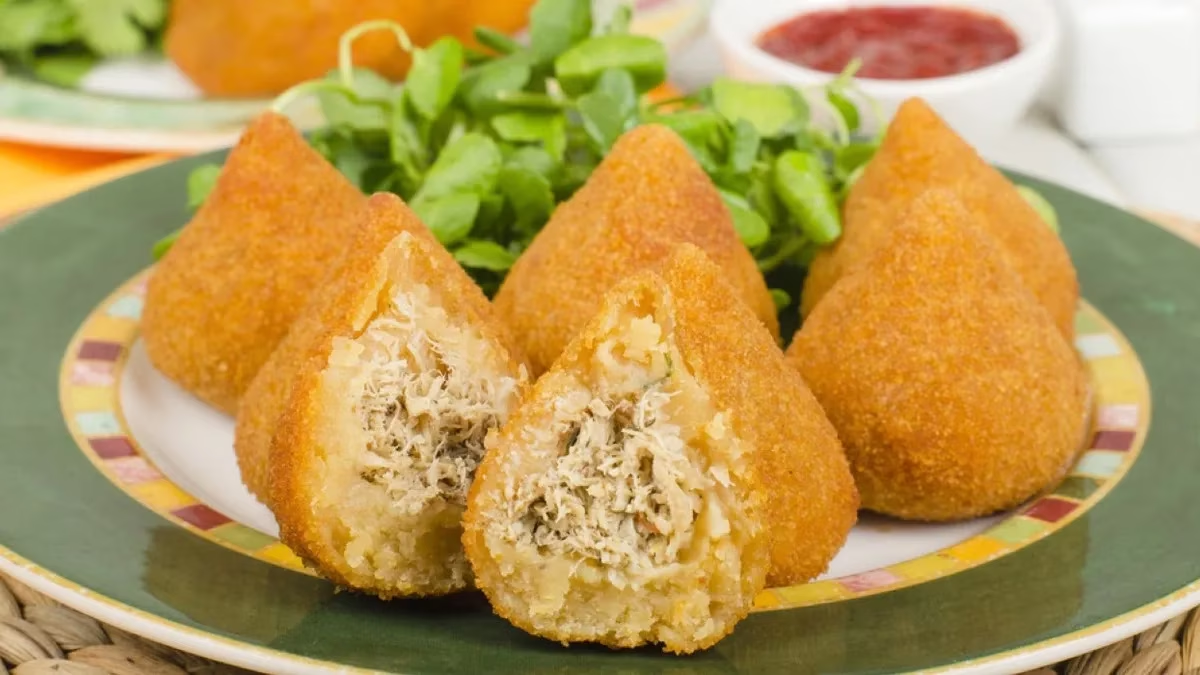
If Brazil had to elect a single representative for its street-food culture, the coxinha would win by a landslide. Shaped to resemble a chicken drumstick (its name literally means “little thigh”), this deep-fried marvel consists of a potato-based dough wrapped around a creamy, shredded chicken filling that often includes cream cheese or catupiry. The dough is then breaded and fried to a golden crunch so thin and delicate that a perfect coxinha avoids any trace of doughiness inside. It is an art form cherished across the country: at children’s birthday parties, in bakery counters, and from the hands of street vendors at every hour. Although the original and most revered version is chicken, modern variations feature meats like beef or pork, or even shrimp along the coast. Brazilians will tell you that a truly great coxinha should crackle softly under the teeth before revealing its luscious interior. After all, in a nation of passionate eaters, could any snack less perfect survive such scrutiny?
Pepito: Venezuela’s Monumental Sandwich
Finally, to the streets of Venezuela, where the Pepito sandwich reigns supreme. This is not your ordinary sandwich—it is a feast designed to be shared, or devoured by one very hungry soul. A soft, large roll is piled high with grilled strips of beef or chicken, then topped with a dizzying array of condiments and fresh ingredients: shredded lettuce, sliced tomatoes, grated carrots, finely chopped cabbage, creamy avocado, and an arsenal of sauces that include garlic mayo, ketchup, mustard, and tangy pink salsa rosada. The beauty of the Pepito lies in its excess and its inclusivity; street vendors, known as pepiterías, compete fiercely for the title of best Pepito in the city, and no two are exactly alike. Some add crispy potato sticks for crunch, others include fried eggs or even plantains. The sandwich is so substantial that ordering a whole Pepito often prompts the vendor to ask, “to share?” Smiling at the sheer impossibility of fitting it in one’s mouth is part of the experience. In Venezuela, the Pepito is more than a meal—it is a celebration of abundance and generosity.
From the crispy coxinha to the zesty cevichoco, South America’s street foods offer a passport to the continent’s soul. Each bite reveals a layer of history, geography, and cultural pride. Travelers who dare to skip the formal dining room and embrace the bustling streets will find not only affordable sustenance, but genuine connection with the people who have spent centuries perfecting these portable masterpieces. Whether you find yourself at a market in São Paulo or a plaza in Quito, let the aromas guide you—and don’t be afraid to ask for extra chimichurri.
Comments